
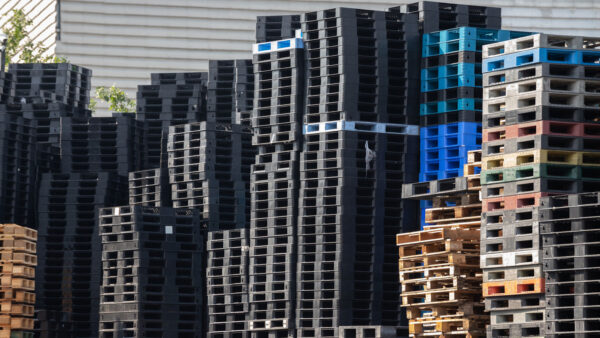
Wood pallets cost less to buy, but they wear out fast, often within 5 to 10 trips, while a plastic pallet can run for hundreds more. If you’re weighing reusable plastic pallets vs wooden pallets for a closed-loop or hygiene-sensitive operation, total cost usually favors plastic once you get past the initial sticker price.
That’s the short answer. The next few sections walk through the cost per trip, how long each material lasts, and when wood is the smarter buy.
Quick comparison: plastic vs wood at a glance
| Factor | Plastic Pallets | Wood Pallets |
|---|---|---|
| Upfront cost | Higher per unit | Lower per unit |
| Typical lifespan | 400 to 700+ trips | 5 to 10 trips before repair or scrap |
| Weight | Lighter, consistent | Heavier, varies by build |
| Hygiene | Non-porous, washable | Absorbs moisture, can trap bacteria |
| Repairability | Rarely needs repair | Frequently needs nail or board replacement |
| Export compliance | Exempt from ISPM-15 | Requires heat treatment |
| Recyclability | Recyclable, buyback programs available | Limited, often landfilled after breakdown |
Upfront cost vs cost per trip
A standard wood pallet typically runs $10 to $25, while a comparable reusable plastic pallet usually falls in the $25 to $80 range. On paper, wood looks like the obvious pick. But pallets aren’t a one-and-done purchase, they’re infrastructure, and infrastructure gets judged on what it costs to use, not what it costs to buy.
A $15 wood pallet that lasts five trips before it splinters, cracks, or gets tossed works out to about $3 per trip. Meanwhile, a $40 plastic pallet running 500 trips before retirement costs about eight cents per trip.
Plastic vs paper packaging: where the savings come from
The same cost-per-trip logic applies to what rides on the pallet. Most loads leave the dock in corrugated cardboard, and a cardboard carton is priced to be used once. Every cycle, someone buys new boxes, assembles them, tapes them, breaks them down on the other end, and pays to have the flattened bales hauled away. Each of those steps has a labor cost attached, and none of them show up on the packaging invoice.
Reusable plastic totes and trays move that spend from a recurring line item to a one-time purchase. A corrugated box that costs a couple of dollars and makes one trip works out to a couple of dollars per trip. A plastic tote at ten to twenty times that price, running a hundred or more trips, lands somewhere around a quarter per trip, and it keeps dropping the longer the tote stays in service.
The savings compound beyond the unit price. Plastic totes don’t soften in humidity or fail in cold storage, so product damage rates drop. Stack and nest containers hold standard footprints, so trailers cube out more efficiently and fewer return trips run half empty. They don’t need tape or void fill. And because they hold their shape, they run through automation and conveyor lines without the jams that crushed cardboard causes.
For operations that still need the light weight and print surface of a box, corrugated plastic bridges the gap. It handles the same roles as fiberboard but survives moisture and dozens of trips instead of one. And on a closed-loop lane, pairing a plastic pallet with plastic totes or trays means the entire load unit comes back and goes out again. Paper-based packaging has to be repurchased every time.

Durability and lifespan
Wood fails: boards crack under repeated loading; nails come loose and start snagging shrink wrap, or worse, employees’ hands; and pallets splinter when you’re loading a truck and nobody wants to deal with them.
Plastic doesn’t have those failure points because it doesn’t have nails or boards. It’s molded as one piece, which means the load capacity stays consistent trip after trip instead of degrading. Heavy-duty and rackable options hold up well in warehouse racking systems, where a wood pallet’s inconsistent strength can turn into a safety concern over time.
If your operation runs pallets through automated systems or high racking, that consistency is the difference between a smooth shift and a forklift operator radioing in a problem.
Hygiene and contamination
Wood is porous. That’s fine for a lot of shipping applications and a liability for others. Moisture gets in, mold can grow, and once a wood pallet has absorbed a spill, there’s no cleaning it out.
Plastic pallets don’t have that problem. The surface is sealed, washable, and doesn’t absorb liquids, odors, or bacteria. For food production, pharmaceutical distribution, or cleanroom environments, plastic pallets are often a regulatory requirement. Auditors prefer pallets they can hose down and inspect in under a minute.
Export and compliance (ISPM-15)
Wood pallets crossing borders need heat treatment to meet ISPM-15 rules, which exist to stop pests from hitching a ride in untreated wood. That treatment adds cost, an extra step to your process, and a way for a shipment to get flagged or delayed if the paperwork isn’t right or the heat treatment is inconsistent.
Plastic pallets are exempt. For export-heavy operations, one-way and export pallets built in nestable designs solve two problems at once: compliance and shipping volume, since nestable pallets stack tighter and cut freight costs on the return leg.
You can check the specifics of the treatment requirement directly through APHIS’s ISPM-15 guidance.
Eliminating waste from the supply chain
Single-use packaging creates waste at both ends of every shipment. On the outbound side, wood pallets get scrapped after a handful of trips and corrugated boxes are discarded after one. On the receiving side, someone has to break down, sort, bale, and pay for hauling on all of it. Facilities that receive high volumes often run a dedicated compactor and a recurring waste contract just to keep up.
Reusable plastic packaging takes most of that out of the system. A plastic pallet that lasts several hundred trips replaces dozens of wood pallets over its life. A tote that cycles for years replaces hundreds of cardboard boxes. The disposal step, the dumpster pulls, and the labor tied to handling waste at the dock shrink along with it.
When plastic pallets and containers do reach end of life, the material stays in circulation. Most are made from recyclable resin that can be ground and remolded into new product. RTP’s buyback and trade-in program collects worn units so they never sit in your warehouse, and the container recycling program keeps damaged or obsolete stock out of the landfill. That gives operations a measurable sustainability story to report, backed by fewer purchase orders and lower waste-hauling bills rather than offsets.
If you’re not sure where reusables would cut the most waste in your lane, RTP’s packaging consulting team can map it out against your current spend.
When wooden pallets still make sense
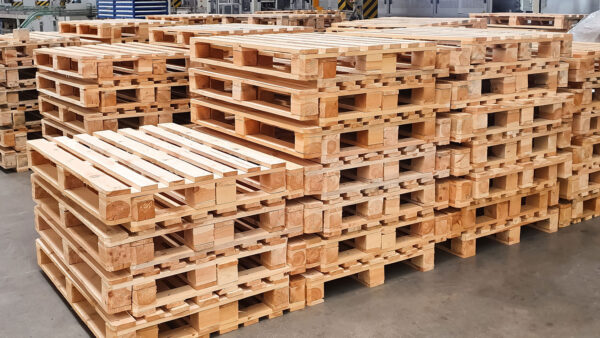
Despite its benefits, plastic isn’t always the right choice. If you’re shipping a single one-way load, working with a tight upfront budget, or moving something outbound that’ll never come back to you, wood is often the more sensible choice. Paying a premium for a pallet you’ll never see again doesn’t make financial sense no matter how good the material is.
The decision really comes down to whether the pallet is part of a loop or part of a one-time journey. Plastic is ideal for closed-loop, high-frequency, or hygiene-sensitive operations. Meanwhile, wood is a good choice for single-use, budget-constrained, or unpredictable outbound shipments.
Choosing the right reusable plastic pallet
Not every plastic pallet is built for the same job, so matching the pallet to your load and your racking setup is important. A pallet rated for light distribution work will struggle under a heavy industrial load, and a bulky heavy-duty pallet is overkill for light e-commerce cartons.
Start by looking at your current lineup of plastic pallets and consider the following three things:
- How much weight you’re moving
- Whether the pallet needs to sit in racking
- How often it travels
For higher loads and warehouse racking, a heavy duty plastic pallet is usually the better fit. If budget is a factor and you don’t need brand-new stock, used plastic pallets can bring the cost per unit down significantly without sacrificing much in performance.
And when your fleet eventually needs refreshing, our container buyback and trade-in program means old pallets don’t take up valuable space in your warehouse.
FAQs
Are plastic pallets cheaper than wood?
Not at first. A wood pallet costs less to buy, so it wins on the sticker price. Plastic usually costs less per trip, though, because one pallet runs hundreds of cycles instead of a handful, and it rarely needs repairs. In closed-loop operations, that lower cost per trip adds up fast.
How long do plastic pallets last compared to wood?
Plastic pallets typically last 400 to 700 trips or more before they retire, because they are molded in one piece with no nails or boards to fail. Wood pallets usually need repair or replacement after just 5 to 10 trips, since boards crack and nails work loose under repeated loading and handling.
Do plastic pallets need heat treatment for export?
No. Plastic pallets are exempt from ISPM-15, the rule that requires wood packaging to be heat treated before it crosses international borders. That saves you a processing step, the treatment cost, and the risk of a shipment getting flagged or delayed over inconsistent treatment or missing paperwork on the wood side.
Can plastic pallets be recycled?
Yes. Most plastic pallets are made from recyclable resin, and worn ones can be ground down and molded into new pallets rather than sent to landfill. Buyback and trade-in programs make this easy, since they take your old pallets off your hands and keep the material in circulation instead of taking up warehouse space.
Are plastic pallets better for food and pharma?
Often, yes. Plastic has a sealed, non-porous surface that resists moisture, odors, and bacteria, and it wipes or washes down in seconds. Untreated wood absorbs spills and can trap contaminants, which is a problem in food production, pharmaceutical distribution, and cleanroom settings where auditors need pallets they can inspect and sanitize quickly.
Are plastic pallets stronger than wood?
In most operations, yes. A molded plastic pallet keeps the same load capacity trip after trip, while a wood pallet weakens as boards crack and nails loosen. Rackable and heavy-duty plastic pallets hold consistent weight in racking and automated systems, where a wood pallet’s shifting strength can become a safety concern over time.
How does reusable packaging reduce supply chain waste?
Each reusable plastic pallet or tote replaces dozens to hundreds of single-use wood pallets and cardboard boxes over its life. That cuts purchasing, breakdown labor, and waste-hauling costs at the receiving dock, and worn units can be recycled through buyback programs instead of going to a landfill.
See What Switching to Plastic Pallets Can Save You
Ready to see the numbers for your own shipping volume? Compare plastic pallet options and request a quote, and we’ll help you pin down where the savings add up.
