
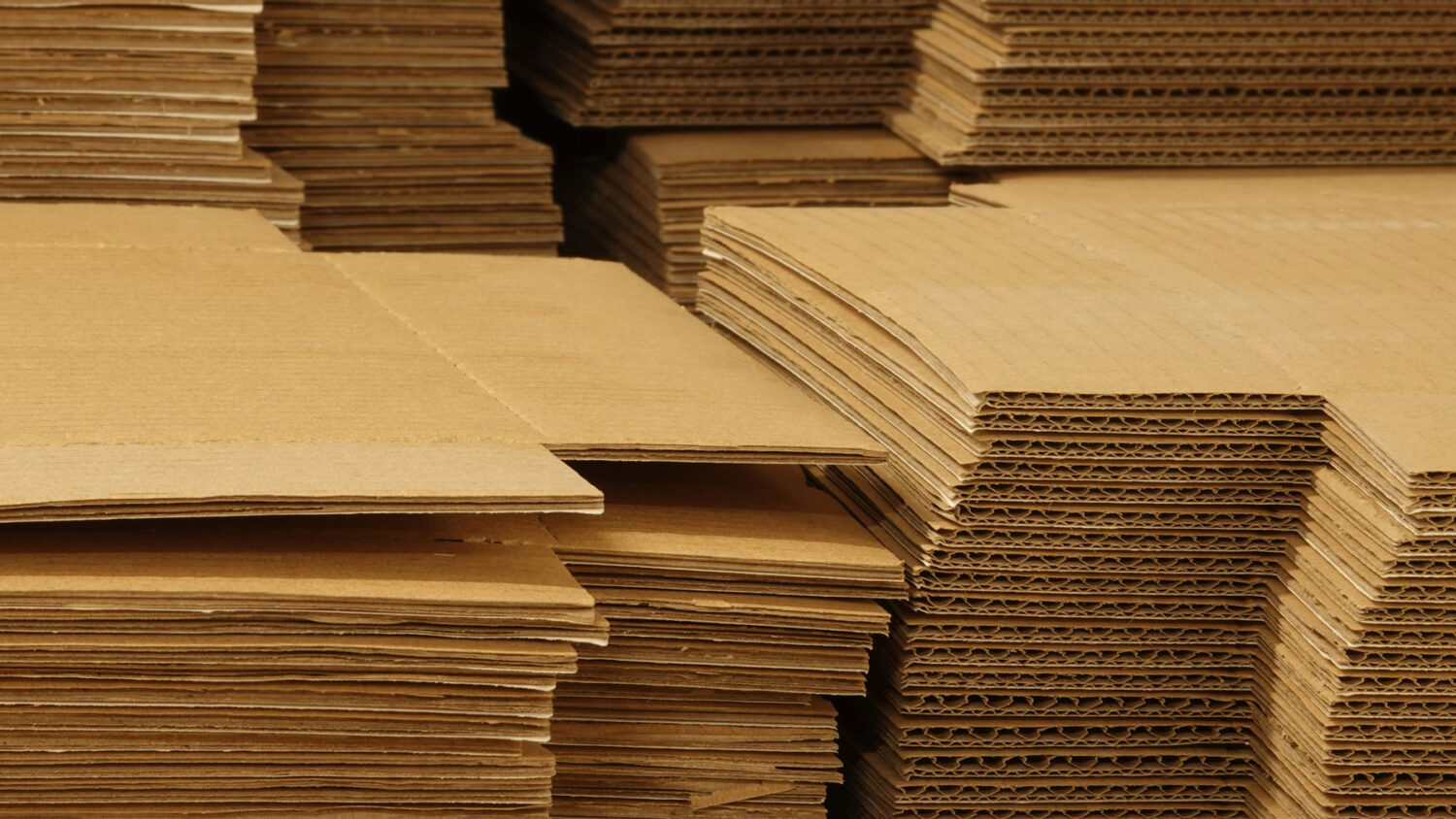
There is no single standard corrugated box size. What you’ll find instead is a cluster of common dimensions most manufacturers stock, along with a grading system, flute type, wall construction, and edge crush strength, which determines how much weight and handling a box can take. Once you understand how size and strength work together, picking the right box stops is easy.
How Corrugated Boxes Are Measured
Corrugated box dimensions are written in the order length, width, and depth (or height), with length being the longer of the two top opening sides. So a box listed as 16 x 12 x 10 opens to 16 inches by 12 inches, with 10 inches of depth.
The detail that trips people up is inside versus outside dimensions. Inside dimensions tell you what will fit inside once the box is assembled. Outside dimensions include the thickness of the board itself, which matters for palletizing, warehouse shelving, and freight quotes. On a single wall box, the gap between inside and outside dimensions might only run an eighth of an inch per side. On double or triple wall corrugated, that gap grows, and across a full pallet load, those extra fractions of an inch add up fast.
Outside dimensions also feed into dimensional weight, or dim weight, the pricing method most carriers use to charge based on the cubic space a box occupies rather than its weight. A box that’s a couple inches bigger than necessary wastes warehouse floor space and can push a shipment into a higher rate bracket.
Common Standard Corrugated Box Sizes
Here’s a working reference of the sizes suppliers stock most often, grouped by how they’re typically used. Treat this as a starting point, as exact stock sizes vary by manufacturer and region. USPS, UPS, and FedEx each publish their own flat rate or branded box dimensions, which don’t always line up with the below sizes.
| Category | Common Dimensions (LxWxD, inches) | Typical Use |
|---|---|---|
| Small parcel | 6x6x6, 8x6x4, 10x8x6 | Small parts, accessories, single-item e-commerce orders |
| Medium | 12x9x6, 12x12x12, 16x12x8 | Multi-item orders, apparel, retail case packs |
| Large | 18x14x12, 18x18x16, 20x20x12 | Bulkier products, grouped orders, appliances |
| Extra-large / freight | 24x18x18, 24x24x24 | Furniture components, palletized freight, moving and storage |
Corrugated Flute and Wall Types
A box’s strength comes down to two things: the flute type and the number of walls.
Single, Double, and Triple Wall
According to the Fibre Box Association, corrugated material comes in a few standard constructions. Single wall board sandwiches one fluted medium between two liner sheets. Double wall adds a second fluted layer and a third liner, and triple wall stacks three flutes between four liners for maximum strength. Single wall covers most general shipping needs. Double and triple wall step in for heavy, dense, or long-haul freight where the box needs to maintain its shape under weight.
Flute Grades A, B, C, and E
Flute size is graded by letter, and the letters reflect the order they were developed rather than any size, so A isn’t necessarily the largest.
A flute was the original profile, running about 33 flutes per foot, and it has strong cushioning and stacking strength. B flute came next at roughly 47 flutes per foot, built for self-supporting canned goods. C flute followed as an all-purpose middle ground at about 38 flutes per foot. E flute is around 90 flutes per foot, trading some cushioning for a smoother, more printable surface, which is why it shows up so often on retail-ready packaging. F flute is about 125 flutes per foot and was made for small folding cartons.
Generally, bigger flutes have better cushion and can stack more easily while smaller flutes print cleaner and take up less space in the box itself.
ECT and Burst Strength Basics
Edge crush test, or ECT, measures how much compressive force a board can take on its edge before it collapses. This force especially affects the bottom box in a pallet. ECT values are stated in pounds per linear inch, and common grades run from around 23 ECT on light single wall board up to 48 ECT or higher for heavier single wall and double wall applications built for stacking.
Burst strength, sometimes called the Mullen test, measures how much force it takes to puncture the face of the board.
Most modern freight and warehouse applications use ECT, since it correlates more directly with how a box performs on a pallet.
How to Choose the Right Box Size
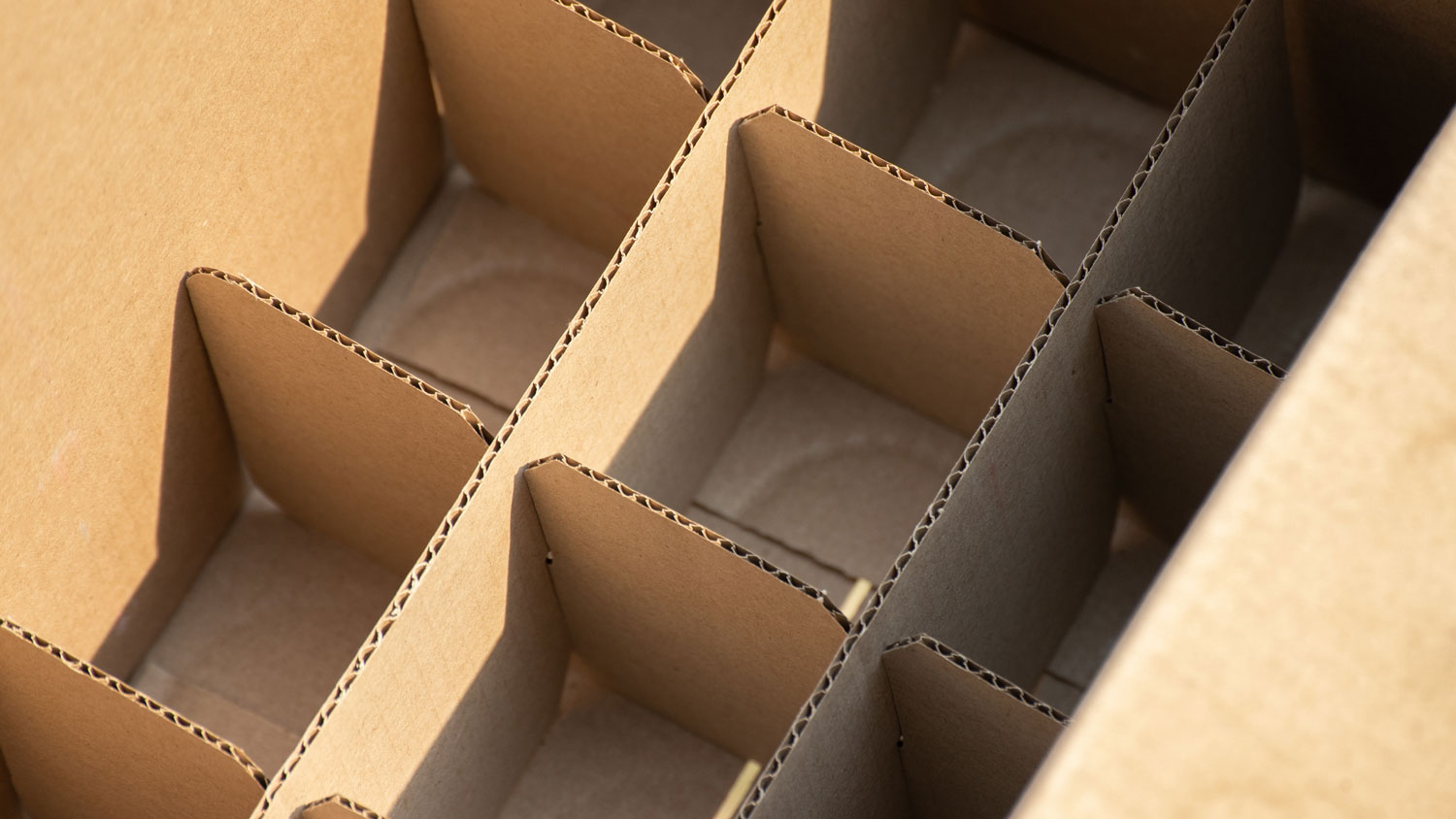
Start with product fit and measure the item at its widest points, then make sure there’s enough room for void fill, foam, air pillows, or paper, so the product isn’t bouncing around but isn’t so tight the box seams take on stress. A box that’s too snug can bulge or split under normal handling.
If boxes are stacked on a pallet or in a warehouse rack for any length of time, the ECT rating and flute grade need to match that load. And because shipping cost tracks cubic size, right-sizing the box is one of the more direct ways to control freight spend across a high-volume shipping lane.
Reusable Corrugated Plastic: A Durable Alternative
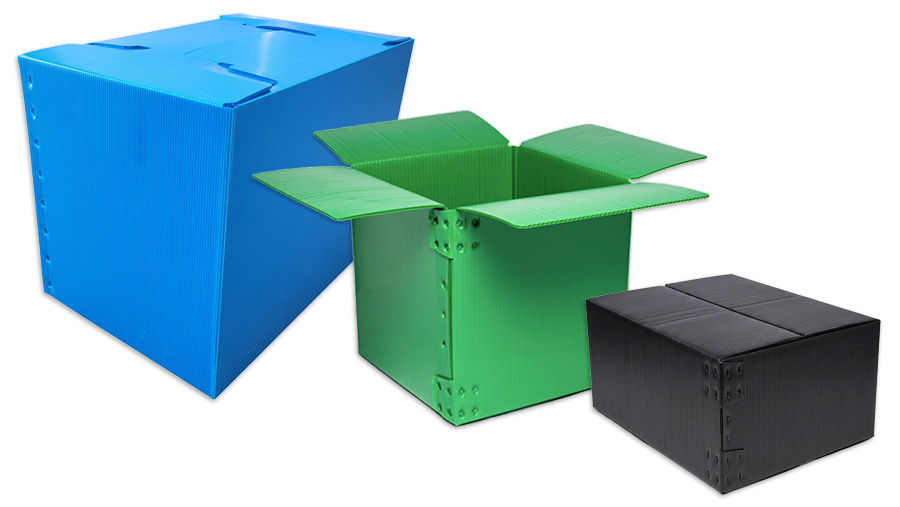
All of the above applies to single-use corrugated cardboard, and for one-way shipments or retail presentation, that’s often still the right call. But for repeat shipping lanes, reusable corrugated plastic outperforms cardboard on total cost and durability.
Corrugated plastic doesn’t absorb moisture the way fiberboard does, which matters in cold storage, wash-down environments, and outdoor staging areas where cardboard softens and fails. It survives dozens or hundreds of trips instead of one, and it doesn’t need to be replaced whenever it gets crushed or wet. For operations running the same route between a plant and a distribution center, or between a supplier and a manufacturing line, that durability translates directly into fewer replacement orders and less packaging waste to manage.
RTP carries a full line of corrugated plastic products, including corrugated plastic totes and corrugated plastic trays built to standard footprints, along with plastic corrugated boxes sized for the same general-purpose shipping and storage roles a cardboard carton handles today.
FAQs
What is the most common corrugated box size?
There’s no single universal size, but a handful of dimensions show up across most suppliers: small parcels around 8 x 6 x 4, medium boxes around 12 x 12 x 12 or 16 x 12 x 8, and larger cartons in the 18 x 18 x 16 range. Which one counts as “standard” depends on the industry and the product being shipped.
How do I measure a corrugated box?
Measure length by width by depth, in that order, using inside dimensions if you’re checking product fit. Outside dimensions, which include the board thickness, are what carriers and warehouses use for freight and shelving calculations.
What is the difference between single and double wall?
Single wall board has one fluted layer between two liners. Double wall adds a second flute and a third liner, which roughly doubles the stacking strength and puncture resistance, at added weight and material cost.
What is ECT on a box?
ECT stands for edge crush test, a rating that measures how much compression a board can withstand on its edge before it fails. Higher ECT numbers mean stronger stacking performance, which matters most for palletized freight and warehouse storage.
Is corrugated plastic better than cardboard?
For a single one-way shipment, cardboard usually wins on upfront cost. For repeated trips on the same shipping lane, corrugated plastic tends to win on total cost and durability, since it resists moisture and holds up over hundreds of cycles instead of one.
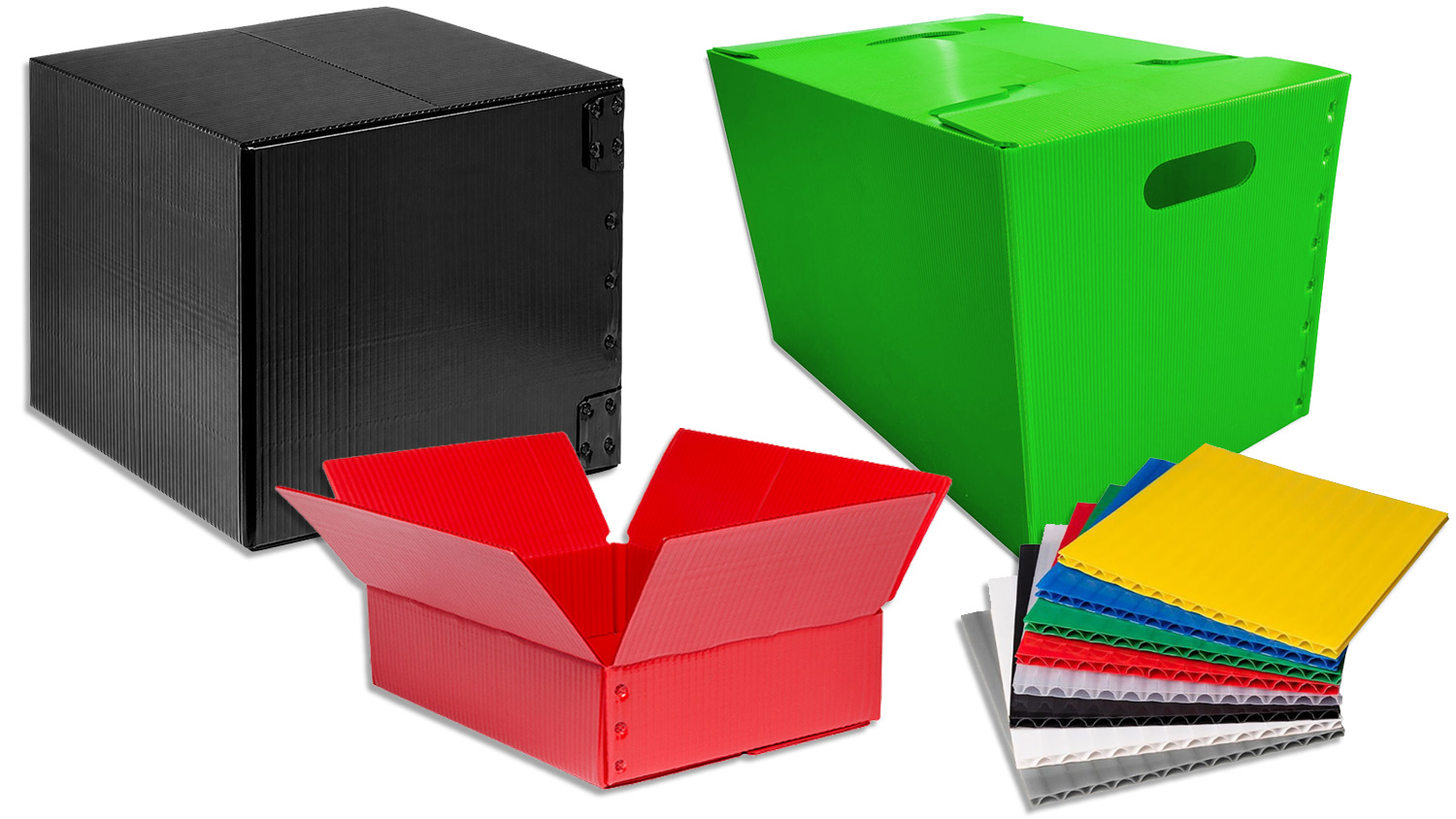
Explore Reusable Corrugated Plastic Boxes
Ready to move beyond single-use cardboard on your repeat shipping lanes? Explore reusable corrugated plastic options or request a quote and RTP’s team will help you find the right fit for your operation.
